


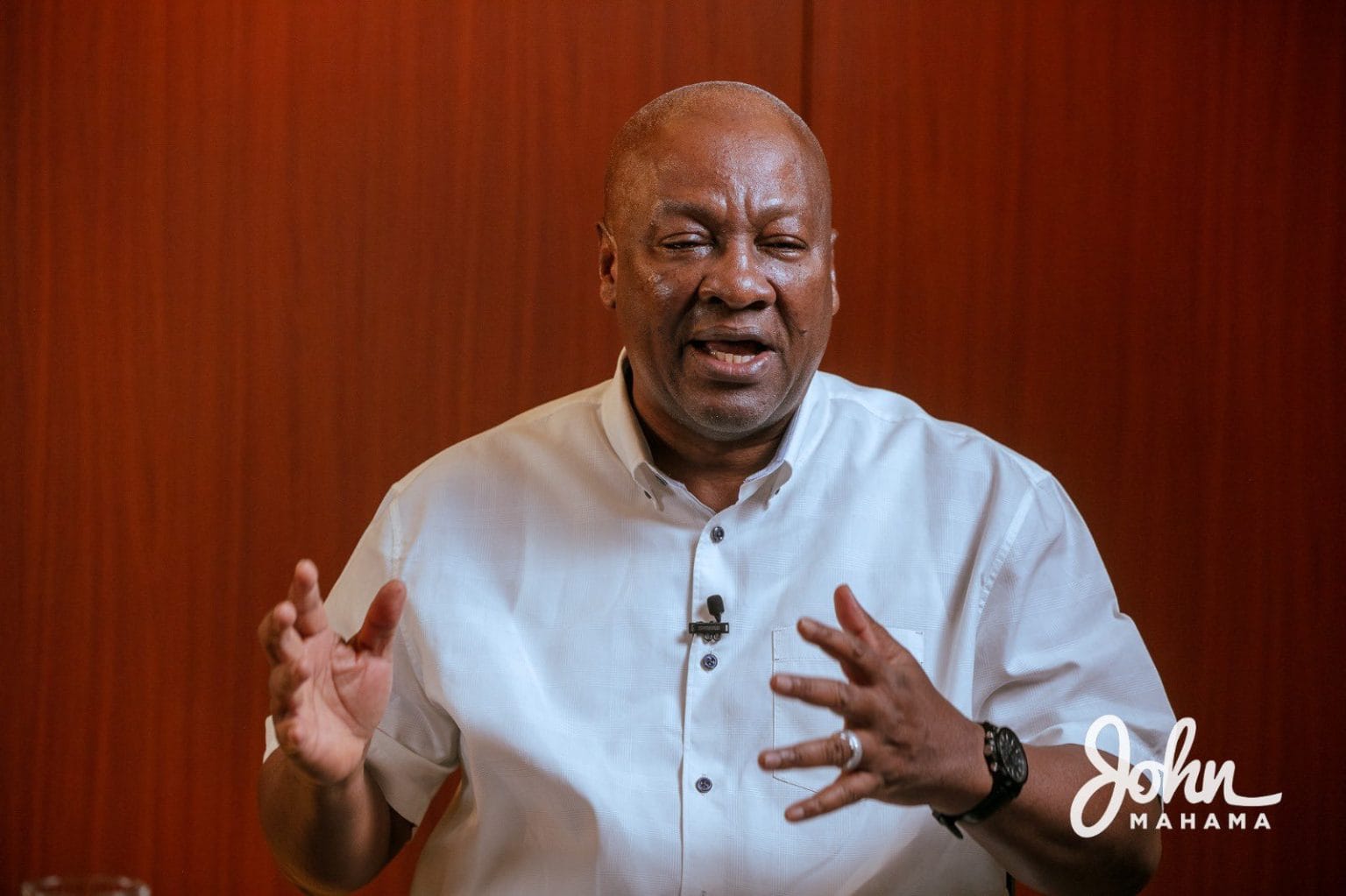
John Dramani Mahama, the former President of Ghana, is renowned for his visionary leadership, dedication to public service, and commitment to the socio-economic development of his country. Born on November 29, 1958, in Damongo, Northern Region of Ghana, Mahama’s journey from humble beginnings to the presidency exemplifies his tenacity, intellect, and unwavering dedication to the well-being of Ghanaians.
John Mahama’s early life was steeped in politics and public service. His father, Emmanuel Adama Mahama, served as a Member of Parliament and the first Regional Commissioner of the Northern Region during Ghana’s First Republic. This familial connection to politics profoundly influenced Mahama’s worldview and fueled his desire to serve his nation.
Mahama’s academic journey began at Achimota School, a prestigious secondary institution in Accra, where he displayed exceptional academic and leadership skills. He continued his education at the University of Ghana, Legon, earning a Bachelor of Arts degree in History in 1981. His thirst for knowledge took him to the Institute of Social Sciences in Moscow, where he obtained a postgraduate degree in Social Psychology in 1988.
Mahama’s political career commenced in 1996 when he was elected as a Member of Parliament (MP) for Bole-Bamboi. His articulate advocacy and genuine concern for his constituents quickly established him as a rising star within the National Democratic Congress (NDC) party. He held various ministerial roles, including Deputy Minister of Communications and Minister of Communications.
In 2009, Mahama became the Vice President of Ghana under President John Atta Mills. Following Mills’ untimely death in July 2012, Mahama ascended to the presidency, making history as the first Ghanaian head of state born after the country’s independence. He won the presidential election in December 2012, securing a full term.
During his tenure, Mahama spearheaded numerous projects aimed at transforming Ghana’s infrastructure and economy. His administration focused on extensive infrastructure development, including the construction of roads, schools, and hospitals, and the expansion of electricity and water supply systems. Notable projects included the Kwame Nkrumah Interchange in Accra, which significantly eased traffic congestion in the capital.
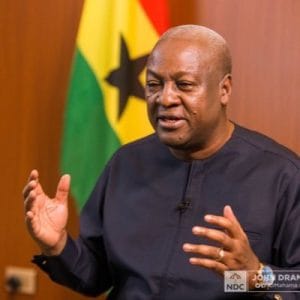
Mahama also championed education and healthcare reforms, recognizing their importance for sustainable development. His administration implemented the Free Senior High School policy, increasing access to secondary education, and expanded the National Health Insurance Scheme, ensuring broader healthcare access. New health facilities were built under his leadership, enhancing the quality of healthcare services available to Ghanaians.
His commitment to democratic principles and good governance was evident throughout his presidency. Mahama strengthened institutions like the Electoral Commission and upheld a vibrant environment for free speech and media freedom, essential elements for a thriving democracy.
Since leaving office in January 2017, Mahama has remained an influential figure in Ghanaian politics and on the international stage. He continues to advocate for democratic values, social justice, and sustainable development. An accomplished author, Mahama penned a memoir titled “My First Coup d’État: And Other True Stories from the Lost Decades of Africa,” offering deep insights into his life and Africa’s political landscape.
Mahama has also engaged in international peacebuilding efforts, notably serving as the African Union’s High Representative to Somalia. His experience and statesmanship make him a sought-after speaker and advisor on governance and development issues.
In 2023, Ghana’s main opposition party, the National Democratic Congress, overwhelmingly voted to retain John Mahama as its leader for the 2024 presidential election.
This marks Mahama’s third bid for the presidency in one of Africa’s most stable democracies, having previously finished second to President Nana Akufo-Addo in both the 2016 and 2020 elections.
Mahama has consistently stressed that the challenges Ghana faces today require a leader with his extensive experience.
In his words:
“Ghana needs experience and not experiment. Ghana needs a leader who will hit the ground running on 7 January 2025.”
“Ghana needs a leader who will not be given an orientation and excursion through the Flagstaff House – the seat of government. Ghana used to be the shining light on the continent of Africa and I am of the strongest conviction that we can attain those heights again. I believe it and we’ll lead by example.”
NCDC Confirms 30 Deaths From Cholera From January Till Now
Mahama expressed that the current government has let Ghanaians down, resulting in the economic hardships the country is now experiencing.
“This government has been clueless, and in many ways callous. The unthinkable has happened and our country today is broken on all fronts,” said Mahama.
“Ghana is bankrupt. We are saddled with debts we simply cannot pay. We’ve suffered global humiliation of defaulting on our debts and being downgraded by all credit rating agencies to the lowest level ever seen in our history.”
John Mahama’s legacy is characterized by transformative leadership and a vision for a prosperous, inclusive, and democratic Ghana. His life’s work reflects the ideals of service, resilience, and a relentless pursuit of progress.
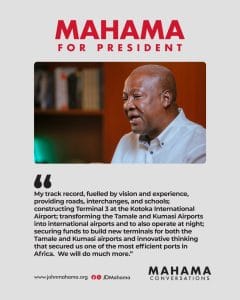
As Ghana prepares for its General Election on Saturday, December 7, 2024, the world watches to see if the remarkable John Mahama will be given another chance to demonstrate true leadership and deliver the change the nation needs.