







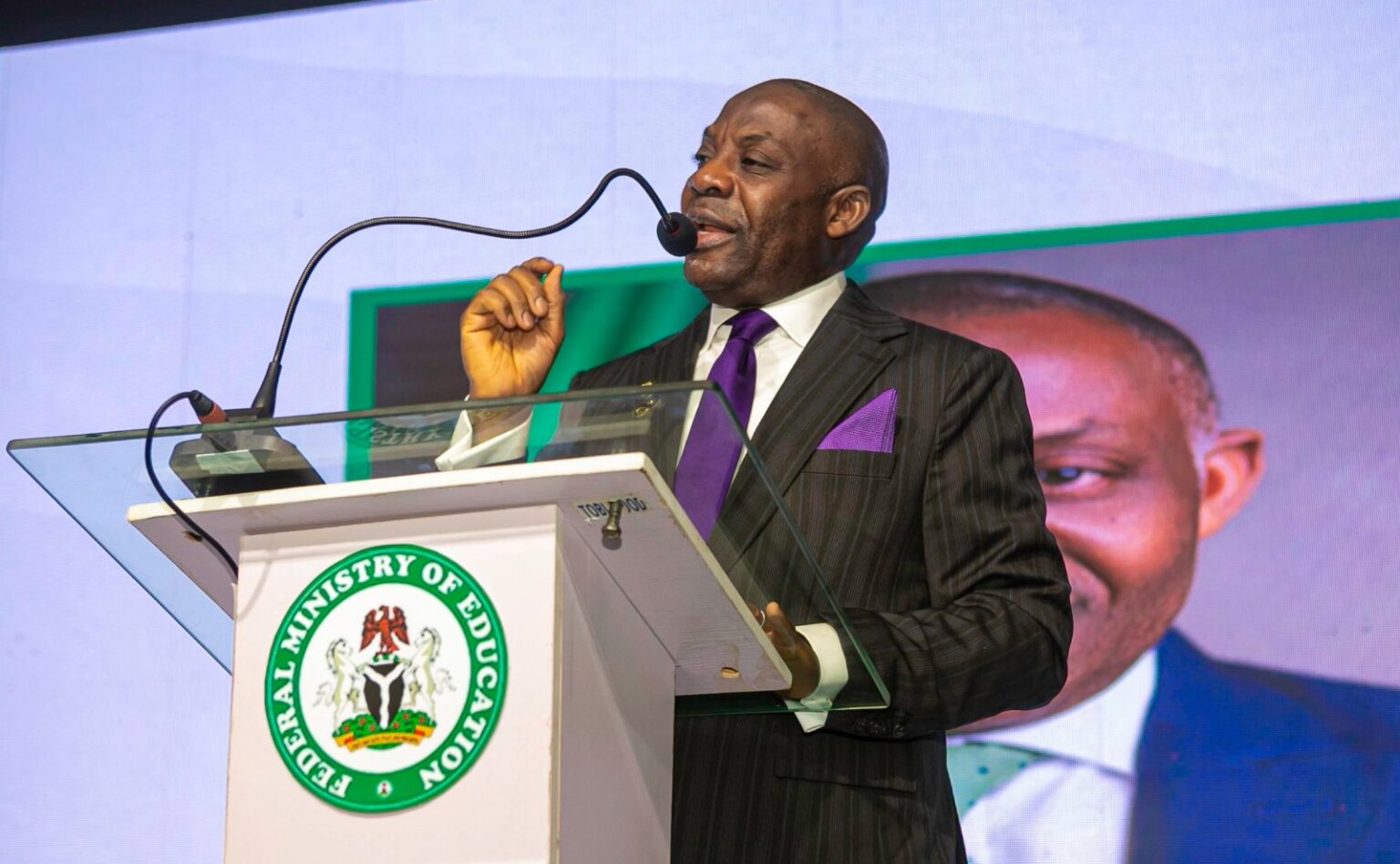
The Minister of Education, Tunji Alausa has disclosed that Nigeria is facing a widening admission gap, with over two million qualified candidates competing for less than 500,000 university spaces every year.
He stated this on Friday at the 65th anniversary celebration of Obafemi Awolowo University (OAU), while delivering a lecture titled ‘65 Years of Excellence: Obafemi Awolowo University and the Future of Higher Education in Nigeria’.
The minister said the growing disparity between the demand for university education and available admission spaces poses a serious challenge to the country’s higher education system.
“Nigeria has over 200 universities, but our carrying capacity is far below demand. Over 2 million qualified candidates apply for less than 500,000 university spaces annually. This is a ticking time bomb,” he said.
Alausa went on to highlight what he described as a mismatch between university training and labour market needs.
“There is a gap between what our universities teach and what the economy needs. Many graduates leave with certificates but without critical thinking, digital skills, or entrepreneurial competence.
“Our best lecturers and brightest graduates are leaving in droves for Europe, North America and the Gulf. This is a hemorrhage of talent,” he said.
The minister raised concerns about the persistent underfunding of the education sector, noting that government allocations have remained significantly below international recommendations, with implications for infrastructure, research and access to higher education.
“Federal allocations to education have historically hovered between 5 per cent and 8 per cent of the national budget—far below the UNESCO-recommended 15-20 per cent. As a result, infrastructure decays, laboratories lack equipment, and libraries cannot subscribe to modern journals.
“Nigeria spends less than 0.2 per cent of GDP on R&D. In contrast, Israel spends over 4 per cent, South Korea nearly 5 per cent. We cannot engineer a future with that kind of investment,” he said.
Despite the challenges, Alausa expressed optimism about the future of higher education in the country, citing the capacity of Nigerian universities to drive solutions.
He said the federal government had introduced measures aimed at improving access to education, including the Nigerian Education Loan Fund (NELFUND).
Alausa added that the government was implementing the revised National Policy on Education as part of efforts to strengthen the sector and improve learning outcomes.

