





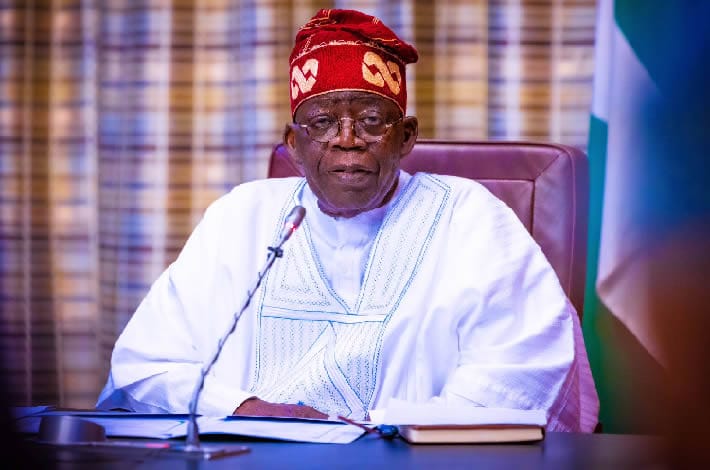
President Bola Ahmed Tinubu’s warm reception of the outcomes from the recent France-Nigeria Business Council meeting has once again placed Nigeria at the center of international economic conversations.
Government officials and private sector stakeholders have described the meeting as productive, strategic, and capable of opening a fresh chapter of investment-driven cooperation between both nations. On the surface, this appears to be welcome news for a country eager to attract foreign capital, boost industrial growth, and create jobs for millions of citizens.
Yet beneath the applause and diplomatic optimism lies a question many Nigerians have grown accustomed to asking: will this meeting produce real economic transformation, or will it become another polished summit remembered only for photographs and speeches?
This question is not born out of cynicism but from experience. Nigeria has hosted and participated in countless investment forums, bilateral trade talks, and high-level economic partnerships over the years. In many cases, these engagements ended with glowing communiqués, signed memoranda of understanding, and promises of future projects. But for ordinary Nigerians, the expected impact often failed to materialize in ways that touched daily life.
The France-Nigeria Business Council meeting certainly carries significance. France remains one of Nigeria’s most important economic partners in Europe, with major French companies already deeply invested in sectors such as energy, logistics, manufacturing, retail, and telecommunications. The strengthening of this relationship suggests that international investors continue to see Nigeria as a market of enormous potential despite its economic struggles.
For President Tinubu’s administration, this represents validation of ongoing economic reforms. Since assuming office, Tinubu has championed difficult policy changes, including subsidy removal and foreign exchange market reforms, arguing that short-term pain is necessary for long-term stability. His government has repeatedly assured citizens that these policies will attract global investment and unlock future prosperity.
The outcomes of the France-Nigeria Business Council appear to support that argument. New commitments, stronger business confidence, and renewed dialogue indicate that foreign investors are watching Nigeria closely and may be willing to deepen their presence.
However, investment confidence at the international level does not automatically translate into better living conditions at home.
The average Nigerian is less concerned with billion-dollar trade projections and more concerned with practical realities: the cost of food, access to stable electricity, job opportunities, transport costs, and affordable housing. These are the measures by which citizens judge whether economic diplomacy is succeeding.
For this reason, the true success of the France-Nigeria Business Council will not be measured by the elegance of its closing statements or the number of executives in attendance. It will be measured by implementation.
Will the agreements signed lead to factories being built? Will they create meaningful employment for young Nigerians? Will infrastructure projects emerge that improve transportation, energy supply, and commerce? Will local businesses benefit through partnerships that encourage technology transfer and knowledge sharing?
These are the outcomes Nigerians deserve to see.
The challenge of implementation has long haunted Nigeria’s economic planning. Too often, impressive international partnerships lose momentum once summit headlines fade. Bureaucratic bottlenecks, inconsistent regulation, policy reversals, corruption concerns, and infrastructure deficiencies have historically weakened investor enthusiasm after initial excitement.
This is where Tinubu’s administration faces a crucial test.
If this government is serious about converting foreign interest into visible progress, it must aggressively remove obstacles that discourage long-term execution. Regulatory processes must be simplified. Contract enforcement must be strengthened. Power supply issues must be addressed with urgency. Security concerns affecting business operations must not be ignored.
Investors may be attracted by opportunity, but they stay because of predictability.
There is also a broader issue of transparency. Nigerians deserve clear communication about what exactly has been agreed, how these agreements will be implemented, expected timelines, and how citizens stand to benefit. Economic diplomacy cannot remain an elite conversation understood only by ministers and corporate executives.
Public trust grows when citizens can connect government actions to real-world outcomes.
The Tinubu administration has an opportunity to distinguish itself from past governments by proving that international business engagement can produce visible domestic impact.
Doing so would strengthen public confidence not only in the President’s economic reforms but also in Nigeria’s ability to compete globally as a serious investment destination.
France, for its part, also has much to gain from a successful partnership.
Nigeria offers one of Africa’s largest markets, a youthful population, abundant natural resources, and strategic influence across the continent. French businesses seeking growth in Africa increasingly recognize Nigeria as indispensable.
But partnerships of this scale must be mutually beneficial. Nigeria must avoid relationships where foreign companies dominate while local industries remain weak. Sustainable progress requires collaboration that builds Nigerian capacity, empowers local enterprises, and ensures value remains within the country.
Ultimately, the France-Nigeria Business Council meeting should be viewed as an opportunity rather than an achievement.
The applause surrounding it is understandable. Positive international attention matters, especially at a time when Nigeria is working to restore investor confidence. Yet applause alone cannot create jobs, lower inflation, or ease hardship.
Those outcomes require action.
The real work begins now, in ministries, regulatory agencies, boardrooms, and project sites where promises must become reality.
For millions of Nigerians waiting for economic relief, success will not be measured by diplomatic praise from Paris or polished statements from Nairobi. It will be measured by whether these promises improve life at home.
Until then, cautious optimism remains the wisest response.