







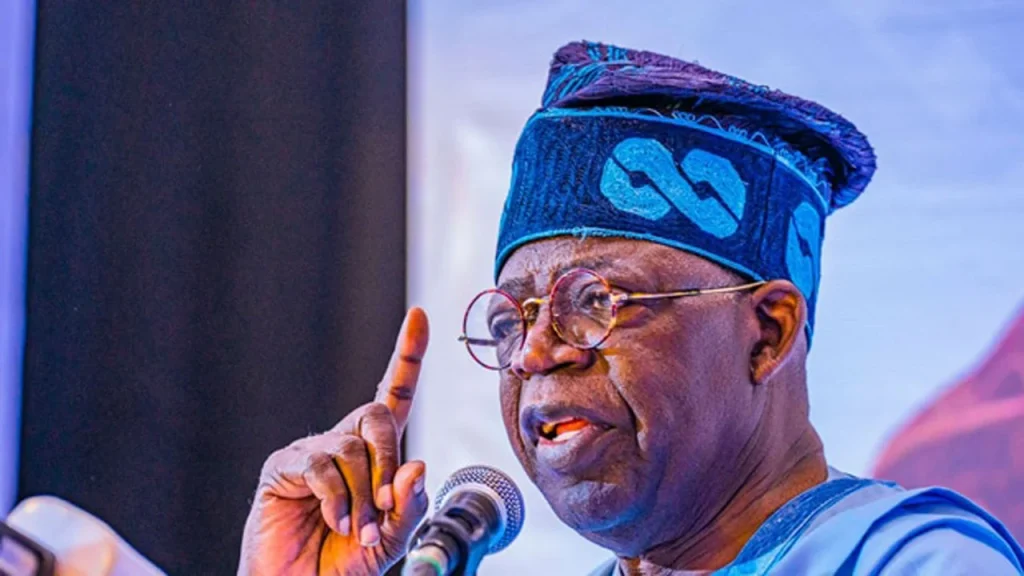
President Bola Ahmed Tinubu has urged African countries to come together to protect their mineral wealth and reduce the ongoing exploitation of the continent’s natural resources by external interests.
Speaking at a meeting with members of the African Minerals Strategy Group in Abuja, the President highlighted that Africa holds some of the world’s most valuable minerals, which are essential for industries such as energy production, technology, and manufacturing.
He noted that despite this abundance, many African countries still export raw minerals without processing them locally, a practice he said limits economic growth and keeps much of the value outside the continent.
Tinubu called for a shift in approach, stressing the importance of local processing, industrial development, and value addition so that African nations can benefit more directly from their resources through job creation and increased revenue.
He further explained that stronger cooperation among African countries would improve their negotiating power in global markets and help them secure fairer agreements with international partners.
The President also encouraged increased investment in infrastructure, research, and technology to support mineral processing industries across the continent.
According to him, Africa must move beyond being a supplier of raw materials and instead position itself as a major player in global production and industrial value chains.
In essence, Tinubu’s message focused on unity, economic transformation, and ensuring that Africa’s mineral wealth delivers greater benefits to its people.
Tinubu also underscored the importance of creating a more stable investment environment that balances openness to foreign capital with the protection of national interests. He noted that while international partnerships remain important for capital inflow and technical expertise, African nations must ensure that agreements are structured in a way that prioritizes long-term local benefits rather than short-term gains. According to him, transparent regulatory systems and consistent policy frameworks will help build investor confidence while still safeguarding national sovereignty over natural resources.
He further stressed the role of regional economic blocs such as ECOWAS in West Africa and other continental frameworks in driving harmonized mining policies. By aligning regulations and standards across borders, he said Africa can reduce illicit mineral trading, improve revenue tracking, and create a more predictable environment for large-scale industrial investment. He added that coordinated policies would also help prevent unfair competition between African countries that often weakens collective bargaining power.
The President pointed out that value chain development should be a priority, not just mineral extraction. He explained that building smelting plants, refineries, battery production facilities, and advanced manufacturing hubs across Africa would significantly increase the economic value derived from natural resources. Such infrastructure, he said, would also stimulate supporting industries, including logistics, engineering, and financial services, thereby creating a wider economic ecosystem.
Tinubu concluded that Africa’s future prosperity depends on bold leadership and a shared commitment to transformation. He urged policymakers, private sector actors, and development partners to align efforts toward building a self-reliant industrial base that reduces dependency on external markets. In his words, the continent must act decisively to ensure that its mineral wealth becomes a foundation for inclusive growth rather than a source of historical imbalance.

