




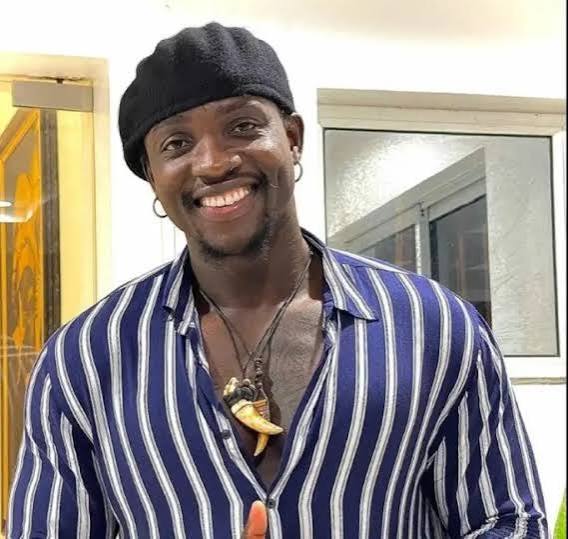
Popular social media activist Martins Vincent Otse, widely known as VeryDarkMan (VDM), has once again found himself at the center of public controversy following remarks he made during a recent protest against insecurity in Oyo State.
The comments, which have since circulated widely across social media platforms, have generated intense debate among Nigerians, with supporters and critics offering sharply different interpretations of his message.
VDM made the statement while addressing protesters during a demonstration in Ibadan organized to demand urgent action over the abduction of schoolchildren and teachers in Oriire Local Government Area. The protest attracted hundreds of participants who expressed frustration over the prolonged captivity of the victims and the broader security challenges facing the country. Reports indicate that the demonstration remained peaceful, with protesters marching through major roads before proceeding to engage government officials on the security situation.
During his address, VDM warned against any attempt by alleged political actors to use hired thugs to disrupt public demonstrations. In remarks that quickly went viral online, he declared that protesters would defend themselves if attacked and suggested that anyone sent to violently confront demonstrators would face serious resistance. The comments immediately sparked reactions because of their forceful tone and the implications many observers drew from them.
Supporters of the activist argue that his words reflected growing frustration among ordinary Nigerians who feel increasingly vulnerable amid rising insecurity, kidnappings, and violent attacks across different parts of the country. According to those sympathetic to his position, the statement was not an incitement to violence but rather a warning intended to discourage attacks on peaceful protesters exercising their constitutional rights.
Others, however, viewed the remarks differently. Critics contended that public figures and activists have a responsibility to encourage restraint and avoid language that could be interpreted as endorsing violent retaliation. Some commentators argued that while citizens have the right to protect themselves from unlawful attacks, public statements should emphasize peaceful engagement and lawful responses rather than confrontational rhetoric.
The controversy emerged against the backdrop of heightened public concern over security in Oyo State. The protest that brought VDM to Ibadan was organized to draw attention to the plight of schoolchildren and teachers who were abducted in a shocking attack that triggered nationwide outrage. For weeks, families of the victims have anxiously awaited positive developments, while civil society groups, community leaders, and concerned citizens have continued to demand stronger action from authorities.
VDM has been among the most vocal public figures calling attention to the issue. In recent days, he has participated in demonstrations, addressed supporters, and urged government officials to intensify efforts to secure the release of those still in captivity. His activism has resonated with many young Nigerians who see him as a fearless critic willing to challenge authorities and speak openly about issues affecting ordinary citizens.
The latest controversy highlights the increasingly influential role social media personalities play in shaping public discourse. Unlike traditional activists who often operate through formal organizations, figures such as VDM command large online followings that allow their messages to spread rapidly across the country. This influence can amplify important issues, but it can also magnify controversy whenever statements are interpreted as crossing acceptable boundaries.
Legal experts have also weighed in on the broader conversation surrounding self-defense and public protests. While Nigerian law recognizes certain rights related to self-defense, lawyers note that each situation is assessed based on specific facts and circumstances. As a result, many observers caution against making broad assumptions regarding how any future incident would be interpreted by the courts.
Meanwhile, reactions on social media remain deeply divided. Some users praised the activist for what they described as courage in standing up against intimidation, while others expressed concern that increasingly aggressive political language could contribute to tensions at a time when the country faces significant security challenges.
The debate has also reignited discussions about the safety of protesters in Nigeria. Over the years, allegations of attacks by unidentified groups during demonstrations have frequently surfaced, leading activists to demand better protection for citizens exercising their rights to peaceful assembly and expression. Many believe that ensuring the security of demonstrators is essential to maintaining democratic participation and public confidence in civic engagement.
As public discussion continues, the incident serves as another reminder of the powerful intersection between activism, politics, and social media in modern Nigeria. Whether viewed as a passionate defense of protesters or an unnecessarily provocative warning, VDM’s remarks have succeeded in drawing national attention and fueling conversation about protest rights, security, accountability, and the limits of political rhetoric.
For now, the focus of many Nigerians remains on the underlying issue that prompted the demonstration in the first place: the urgent need to address insecurity and secure the safe return of abducted citizens. While opinions differ on the activist’s comments, there is broad agreement that the security challenges facing communities across the country require sustained attention, effective action, and lasting solutions.

