







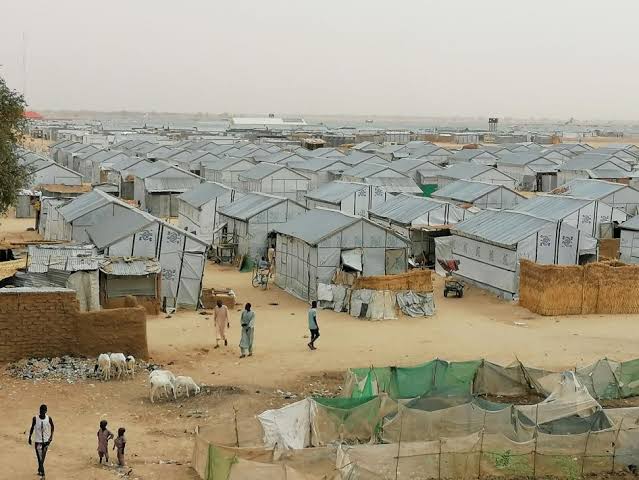
The humanitarian situation in internally displaced persons (IDP) camps across northern Nigeria continues to deteriorate, with thousands of people struggling to survive under harsh and overcrowded conditions. Many of these individuals were forced to flee their homes due to persistent attacks by armed groups, leaving them vulnerable and heavily dependent on limited humanitarian assistance for survival.
In regions such as Borno State and neighboring areas, IDP camps have become severely congested, far exceeding their intended capacity.
What were once temporary shelters have now evolved into long-term settlements, with families spending years in displacement. Overcrowding has led to inadequate living space, forcing multiple families to share small, poorly constructed shelters made from tarpaulin, wood, and other fragile materials that offer little protection against extreme weather conditions.
Access to basic necessities remains a significant challenge. Clean water is scarce, and many residents rely on limited water points that are often overstretched or contaminated. Food supplies are inconsistent, and distribution systems are sometimes unable to meet the growing demand. As a result, many displaced persons report going for extended periods without adequate meals, leading to widespread hunger and nutritional deficiencies.
Humanitarian workers on the ground have raised alarm over increasing cases of malnutrition, particularly among children. Reports indicate that many children in the camps are underweight and suffer from stunted growth due to prolonged lack of proper nutrition. In addition to malnutrition, the spread of preventable diseases such as cholera, respiratory infections, and malaria has become more frequent, largely due to poor sanitation and overcrowded conditions. Limited access to healthcare services further complicates the situation, as medical facilities within the camps are often understaffed and under-resourced.
Women and young girls face unique and heightened risks within these environments. The lack of proper sanitation facilities and privacy exposes them to health challenges and personal safety concerns. There have also been reports of exploitation and abuse, particularly among those who lack financial means or family support. Humanitarian organizations continue to stress the need for gender-sensitive interventions that prioritize the safety and dignity of women and girls.
Despite ongoing efforts by government agencies and international organizations, the scale of the crisis has made effective intervention difficult. Funding gaps remain a major obstacle, limiting the ability of aid groups to expand operations or sustain consistent support. Logistical challenges, including insecurity in certain areas and poor infrastructure, also hinder the delivery of essential supplies and services to those in need.
Local authorities have acknowledged the severity of the crisis and are calling for increased support from both national and international partners. There are growing appeals for more coordinated responses that not only address immediate needs but also provide long-term solutions.
Officials emphasize that without sustained intervention, the situation could worsen, leading to even greater humanitarian consequences.
In addition to emergency relief, there is an urgent need to address the root causes of displacement. Persistent insecurity, driven by armed conflict and instability, continues to force people from their homes. Without meaningful progress in restoring peace and stability, many displaced individuals may remain unable to return to their communities. Economic challenges, including unemployment and lack of access to livelihoods, further complicate efforts to rebuild lives.
Experts have also highlighted the importance of integrating displaced persons into broader development plans. This includes providing access to education, vocational training, and income-generating opportunities that can help individuals regain independence. For children growing up in IDP camps, access to education is particularly critical in preventing a lost generation and breaking the cycle of poverty and displacement.
Community-based initiatives are beginning to play a role in addressing some of these challenges. Local groups and volunteers have stepped in to support displaced families through donations, skill-building programs, and awareness campaigns. However, these efforts alone are not sufficient to meet the scale of need, underscoring the importance of sustained government and international involvement.
Top Society notes that the situation in Nigeria’s IDP camps serves as a stark reminder of the human cost of conflict and instability. Behind the statistics are real people—families who have lost their homes, livelihoods, and sense of security. Their resilience in the face of adversity is remarkable, but it should not overshadow the urgent need for action.
Ultimately, addressing this humanitarian crisis will require a comprehensive and sustained approach. Immediate relief efforts must be strengthened to improve living conditions, while long-term strategies should focus on restoring peace, rebuilding communities, and creating opportunities for displaced individuals to thrive. Only through coordinated action and genuine commitment can lasting solutions be achieved, offering hope for a better future to those affected.

