







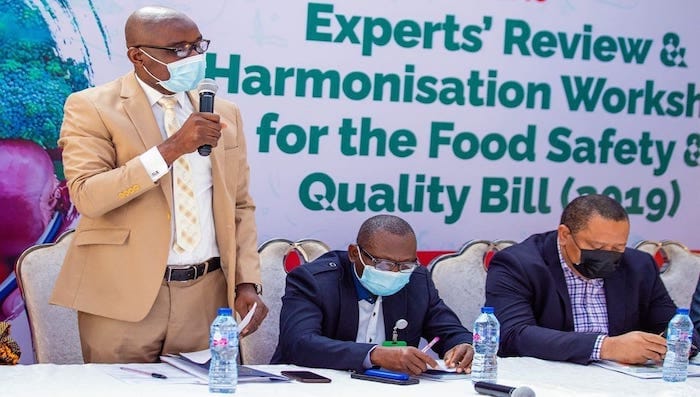
The Nigeria Economic Summit Group (NESG) is spearheading efforts to enhance the country’s food safety system, with emphasis on expediting the passage of the Food Safety and Quality Bill into law.
The NESG convened stakeholders and partners at the Food and Feed Safety Expertise Co-ordination Workshop in Abuja on Tuesday to address the critical issue.
Dr. Tayo Aduloju, Chief Executive Designate of NESG, expressed concerns over the delayed passage of the bill, which has hindered Nigerian agricultural products from accessing international markets without hurdles. Notably, products from Nigeria have faced rejections by foreign countries, including the European Union (EU), United States, and the United Kingdom, partially due to safety and quality concerns.
Speaking about the challenges faced by Nigerian businesses in accessing foreign markets, Dr. Christopher Bielecki, the Councillor for Agricultural Affairs, Nigeria, Benin, and Cameroon from the US Department of Agriculture, stressed the importance of maintaining food safety standards. He acknowledged the need to help Nigeria overcome its limitations and expand its access to foreign markets, fostering improved bilateral trade relations between the two countries.
Dr. Aduloju emphasized the pivotal role of coordination, cooperation, and collaboration among stakeholders in transforming Nigeria’s food systems. He highlighted the significance of strengthening regulatory frameworks to enhance the overall quality of food and feed in the country, given Nigeria’s vast agricultural potential.
Aduloju called upon President Bola Tinubu to show political will and authorization for the passage of the Food Safety and Quality Bill, which was passed by both chambers of the legislature last year but did not receive presidential assent. He urged swift action on this matter, emphasizing its importance for Nigeria’s participation in the African Continental Free Trade Area (AfCFTA).

In response, Dr. Aduloju also underlined that safety and quality were integral components of the food security agenda of the current administration and called for political support to turn these into reality. Passing the bill into law would not only ensure food safety but also enable Nigeria’s food exports to access international markets, crucial for bolstering foreign exchange reserves.
Coordinating Minister of Health and Social Welfare, Prof. Muhammad Pate, expressed satisfaction with the collaboration among food safety stakeholders and their focus on modernizing the food safety system. He highlighted upcoming steps, including the validation of the revised National Policy on Food Safety and Quality and its Implementation Plan, 2023, as well as the launch of the maiden National Integrated Guidelines for Foodborne Disease Surveillance and Response.
The revised policy aims to improve the regulatory, enforcement, and data-gathering system to ensure it is more effective and robust. The guidelines will set the roadmap for integrated surveillance of foodborne diseases and establish protocols for responding to food safety emergencies in Nigeria.
Don’t miss out on: UN Says Food System Accounts for Hidden Costs in Global Economy
Prof. Pate stressed that food security was not only about the availability and affordability of food but also about ensuring that the food consumed was safe, healthy, and nutritious. The collaborative efforts at the workshop represent a significant step toward achieving these goals in Nigeria’s food safety and quality systems.

