





The pronouncement made by President Bola Tinubu, shortly after he was sworn in as the president of Nigeria, has changed the economic situation in the country, and led to high cost of living as prices of goods and services skyrocketed.
The president had announced the removal of petroleum subsidy, a decision which vibrated and reduced the purchasing power of Nigerians.
There were lamentations and condemnations for that decision taken, many were of the view that the president should first settle down in the office, to study the situation of things, before he made any pronouncement, because the petroleum sector is what drives Nigeria’s economy.
Those who support the decision of the president felt he has acted in a good faith, because payment of petroleum subsidy was a scam, which was used to defraud the country by importers of petroleum products, because some claim money for more than what was imported, while others did not import any petroleum products, but forged documents to defraud government.
The proponents of removal of fuel subsidy argued that it will lead to deregulation of the sector and create an avenue for competition among the oil marketers.
All the arguments supporting the removal of the fuel subsidy, have not yielded any positive result that will mitigate the suffering of the Nigerian masses.
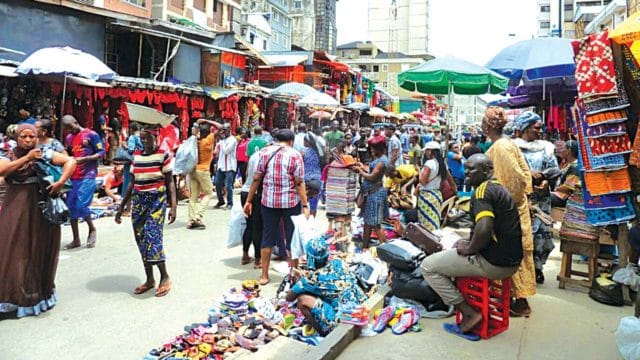
This decision to remove oil subsidies has had a negative effect on the economy and social life of the people. In order to save cost, many vehicle owners have decided to park their vehicles at home and go by public transportation. Due to the high cost of goods. Also, those that run joints, drinking parlour now record low sales.
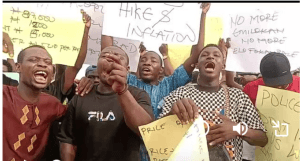
When the hardship became unbearable some Nigerians decided to take to the streets to protest, such was recorded in Kano State, Niger State and some parts of Lagos State, the protesters called on the government to return fuel subsidy which led to the hardship because they can’t bear it again.
Eminent Nigerians are equally not holding aloof on the development as they equally feel the pain.
The Emir of Kano Aminu Ado Bayero while hosting the first lady Chief(Mrs) Oluremi Tinubu in his palace told her to tell President Bola Tinubu that the hardship in the country has reached an alarming proportions.
He noted that, the first lady is best placed to relate her findings about the hunger, insecurity and concerns of the people to the president.
“Although we have several means of communicating to the government on our needs and requests, your way and means are the surest way to tell the president the actual happenings in the country.
“The hunger and starvation, though didn’t start with this government, but the situation has become more alarming and needs urgent attention.”
Therefore, the Kano State government, feeling concerned about the pain and hardship residents of the state were going through, decided to take a practical approach to address the problem.
The State Public Complaint and Anti Corruption Commission (PCACC) invaded the warehouse of traders that hoarded goods, so as to create artificial scarcity, which forced prices of goods to jump up, when supply was lower than demand.
The commission confiscated essential goods running to several millions of Naira stocked in ten warehouses at Dawanau international commodity market in Kano metropolis.
The Commission had set up an intelligence mechanism and launched a manhunt on food hoarders, who Imposed untold hardship on the citizens.
In a grand operation, the Chairman of the Commission, Barrister Muhyi alongside the personnel of the Commission clamped down on warehouses and stores engaged in hoarding of assorted foodstuff, across the state. The owners of such warehouses were said to have absconded.
Speaking on moves made by the federal government to alleviate suffering of the masses, the Permanent Secretary, Federal Ministry of Budget and Economic Planning, Nebeolisa Anako, assured Nigerians that the Federal Government is working round the clock to ease the current and temporary hardship in the country as a result of fuel subsidy removal.
Mr. Anako gave the assurance while addressing the 22nd Joint Planning Board (JPB) and National Council on Development Planning (NCDP) meeting in Osogbo, Osun State capital.
“The present administration is doing everything possible to address the hardship faced by Nigerians in the wake of economic reforms, which has resulted in the removal of fuel subsidies and the floating of the Naira, he stated.”
“These temporary challenges will be over with time, he added.”
Mr. Anako disclosed that the recent N5 billion and some consignments of foodstuff given to each state were part of the immediate measures taken to mitigate the hardship caused by these reforms.
He said that as other medium-term measures unfolded, Nigerians would appreciate the rationale behind these decisions.
The House of Representatives has, however, resolved to investigate the spending of funds from FAAC by states and LGAs in 2023.
The lower legislative chamber passed the resolution during its plenary session, following the adoption of a motion sponsored by Ademorin Kuye, a lawmaker representing Somolu federal constituency of Lagos.
The lawmaker noted that in 2023, FAAC distributed N6.57 trillion to the 36 states of the federation and 774 LGAs.
Kuye noted that FAAC monthly allocation ought to help drive development and aid governments at various levels in fulfilling their duties. The current FAAC revenue-sharing formula allocates 52.68 percent to the federal government.
Hon. Kuye said FAAC allocation has increased significantly due to the withdrawal of petrol subsidies, the floating of the naira and other economic policies of the federal government.
He said the N6.57 trillion received by states in 2023 increased from N3.16 trillion they received in 2022.
The lawmaker stated that despite the “availability of more cash to the states, 14.2 million more citizens continue to grapple with poverty. Most of these states with increased allocation face significant challenges in payment of salaries, effective management of public institutions, provision of public transportation and access to potable water as the unemployment rate has increased to over 51 percent in some of them, hon Kuye said.”
Lagos State government also rolled out some palliative measures, which includes reducing fares of state run public buses subsidising the public bus and giving out palliative to the vulnerable in the society, but all these are not sustainable, it lasted for a while, and the pain and hardship still persist.
The panacea to the problem as advanced, experts said, the three tier of government should focus on improving agricultural products by subsidising the sector, make available all necessary farming inputs that will enhance production of farm produce and provide adequate security for the farmers, because attack on them by bandits have discouraged some of them from visiting their farm, which has negative impact on farm production.
Federal government should also discourage over reliable on vehicles that uses petroleum products, and embrace electric vehicles, which is common in China, Japan and other countries,
This administration should embrace the energy transition strategy with the launch of electric motorcycles and tricycles all over the state.
It is noted that, the commencement of the conversion of state mass transit buses to compressed natural gas including staff buses and current public transportation with the plan to acquire additional new CNG buses to ease transportation, charging fares comparable to what was obtainable before the fuel subsidy removal among others.
Individuals and businesses have a stronger reason to see opportunities in clean energy by embracing cleaner options like electric vehicles, biofuels, or solar-powered technologies. The prevailing high cost of petrol will undoubtedly stimulate investments in affordable renewable energy infrastructure, leading to a greener economy and sustainable transportation systems.
The sum of over N11 trillion the Federal government spent on rehabilitating the refineries from 2010 to date, could have been saved.
The three moribund refineries have become burdensome for the government, prompting the need for their privatisation. Selling the refinery will save the country from wasting the lean resources on the ‘bottomless pit’ of unproductive maintenance.
If the government desires to have a new refinery it will be better as more jobs will be created for the youth and unemployment will reduce drastically.

